Networks as Epistemology
philosophy of social science
What networks reveal about knowledge production. Networks aren’t discovered—they’re enacted. The act of formalizing connections through network analysis is itself a form of power, shaping what can be represented and therefore what can be known about social structure.
Works

Poses the central question of whether networks construct or reveal social reality. By distinguishing "interior perspectives" (a person's own view of their relationships) from behavioural traces treated as data, the piece highlights that formalising communication as a network is an epistemological act—one that determines what counts as a tie, who is visible, and what structure emerges.
DOIAlso in: methods and tools, platforms and power
Develops a conceptual framework for understanding how social prescribing link workers, who connect patients to community resources, navigate the relational structures between healthcare systems and local communities. The network position of link workers, bridging institutional medicine and informal community support, produces a distinct form of knowledge about patient needs that neither system generates alone.
DOIAlso in: methods and tools
The mediating role of self-monitoring in camera-on fatigue reveals that video platforms create a new form of reflexive self-knowledge through constant awareness of one's own visible performance. What users "know" about themselves in a Zoom meeting is fundamentally different from what they know in a phone call, because the platform makes self-perception an unavoidable component of interaction.
DOIAlso in: platforms and power
Argues that with advances in modelling and visualisation, we should ask not only what the networks can tell us, but whether the networks constrain us and our communication. Networks are both lens and cage, as they reveal social structure while simultaneously imposing structure on what can be seen.
DOIAlso in: platforms and power
The instability of nominated network alters across survey waves raises a fundamental epistemological question: does the network change, or does the measurement change? By testing whether structural embeddedness predicts alter retention, this study distinguishes genuine network dynamics from measurement artifacts. The answer to "what is the network?" depends on how and when you look.
DOIAlso in: methods and tools
Uses dyadic data from 6,756 couples across 16 countries to show that partner acceptance of video game use moderates the relationship between gaming and relationship satisfaction. The actor-partner interdependence model reveals that relationship outcomes are network properties, as they emerge from the interaction between partners' behaviors and attitudes rather than from individual characteristics alone.
DOI Reveals that energy conservation practices are shaped not by information alone but by who people discuss energy issues with and in what social contexts. The network perspective shows that stigma around discussing energy creates structural silences, and what cannot be spoken about in a network cannot influence behavior through that network.
DOIAlso in: methods and tools
Network analysis of LGBTQ youth reveals how different audience segments within a single Facebook ego network create competing demands for identity performance. The network structure itself, specifically the degree to which different social circles overlap or remain distinct, determines what kind of self-knowledge is possible in mediated environments.
DOIAlso in: platforms and power
Platforms don't just restrict data access; they eliminate the capacity to produce alternative representations of social structure. By closing APIs while maintaining proprietary access, Facebook ensures only their algorithmic "routes" exist, never user-generated "maps." A case study in how technical architecture becomes epistemological constraint.
DOIAlso in: platforms and power, semantic structures
Social media information access was significant only for first-generation students, those whose parents lacked college knowledge, demonstrating that the epistemological value of network connections is inversely related to institutional access. Networks don't just transmit information; they constitute it differently for differently positioned actors.
Honourable Mention DOIAlso in: platforms and power
Demonstrates that who speaks in Facebook groups is structured by pre-existing friendship networks, not just by topical interest or individual motivation. The finding that conversational agency is a network property challenges the assumption that open platforms create equal voice, revealing instead that existing social structure reproduces itself through the platform.
LinkAlso in: platforms and power
"Informational magnetism" describes how knowledge production on Wikipedia gravitates toward existing economic cores, creating self-reinforcing cycles. This is an epistemological finding, not merely a distributional one: the geography of who produces knowledge determines what knowledge exists, and network effects ensure that initial advantages compound.
DOIAlso in: platforms and power
Brings structural network analysis to the social capital debate, demonstrating that the relationship between Facebook use and social capital only becomes intelligible when ego network structure is examined. The structural lens reveals that not all Facebook connections are equal, as bridging ties, clustering, and density produce different forms of social capital that are invisible to frequency-of-use measures.
DOIAlso in: methods and tools

The "relational self-portrait" concept captures how identity on social networking sites is constituted through connections rather than attributes alone. This is an epistemological claim about selfhood: who you are on a platform is inseparable from who you are connected to, making identity a network property rather than an individual one.
Also in: platforms and power
Wikipedia's uneven geographic coverage is not merely a data quality problem but an epistemological one. The places that remain informationally impoverished on the platform become invisible in any analysis that takes Wikipedia as representative, creating a feedback loop where the absence of knowledge about a place ensures continued absence.
DOIAlso in: platforms and power
Takes a network approach to energy governance, revealing the relational channels through which information and resources flow between community groups and institutional actors. The network lens makes visible a meso-level governance structure, neither individual action nor top-down policy, that shapes how local energy transitions actually happen.
DOIAlso in: methods and tools
Challenges network analysis to account for platforms as actors, not passive infrastructure but entities that actively shape the networks they host. If platforms are actors, then network analysis without accounting for platform agency produces systematically incomplete knowledge about the social structures being studied.
DOIAlso in: platforms and power
Models how networks grow through multiple simultaneous mechanisms including homophily, reciprocity, triadic closure, and popularity, demonstrating that network evolution cannot be reduced to any single explanatory principle. The continuous-observation framework reveals temporal dynamics that panel-data snapshots miss, showing that when you look at a network determines what you see.
LinkAlso in: methods and tools

Updates the immanent internet thesis for the mobile and social media era, noting that "the ethereal internet light that previously dazzled has now dimmed to a soft glow permeating everyday concerns." The internet's increasing invisibility as infrastructure paradoxically makes its epistemological effects harder to identify. The more immanent it becomes, the more it shapes what counts as knowledge without being recognized as doing so.
Cross-national data on online dating reveals that platforms don't merely facilitate existing relationship-seeking patterns but restructure who can know whom. The finding that online dating complements rather than substitutes for offline meeting challenges the binary framing of "online vs. offline" and reveals a more networked epistemology of intimacy.
LinkAlso in: platforms and power
Examines how socioeconomic status shapes access to beneficial network resources, showing that the relationship between position in social structure and social capital is mediated by the networks through which resources flow. The network perspective reveals that inequality is not merely a matter of individual attributes but of differential positioning in relational systems.
DOI Introduces the performance/exhibition distinction that reframes how we understand mediated self-presentation. The shift from real-time interaction to curated display fundamentally changes what can be known about social actors and how that knowledge is produced.
DOIAlso in: platforms and power
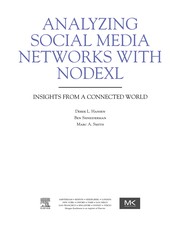
Demonstrates how network visualization transforms Facebook data from flat friend lists into interpretable social structures. The act of visualization is itself an epistemological move, as it makes structural patterns (cliques, bridges, isolates) visible that are present in the data but invisible in the platform's default presentation.
Also in: methods and tools
Compares the structural properties of online and offline ego networks, demonstrating meaningful correspondence in clustering and density. The finding that online networks are not structurally random but reflect offline social organization validates online network data as a legitimate epistemological source for understanding real social structure.
LinkAlso in: methods and tools
Models how face-to-face and electronic communication modes interact within social networks, revealing that different media serve different relational functions rather than simply substituting for one another. The network perspective shows that communication mode choice is structured by relationship type and network position, not just individual preference.
DOIAlso in: methods and tools
Large-scale survey data reveals that internet users spend more time alone yet are at least as socially engaged as non-users, a paradox only resolvable through network analysis. What looks like social isolation through one lens (time-use data) looks like networked participation through another (communication patterns), demonstrating that the framework determines the finding.
Link Demonstrates that travel behavior, seemingly a matter of individual choice and geography, is fundamentally structured by social networks. By making networks visible in transportation data, the study reveals a relational dimension of spatial behavior that individualistic models systematically miss, showing how the lens of analysis determines what can be known.
DOIAlso in: methods and tools
Argues that information networks, the patterns in email, messaging, and online interaction, provide a distinct epistemological window onto social behavior. What networks reveal about social life is not a subset of what surveys reveal; it is a fundamentally different kind of knowledge.
LinkAlso in: methods and tools
The participant-aided sociogram is not merely a data collection tool but an epistemological intervention. By having respondents place alters on a diagram and draw connections, it produces knowledge about social structure that is fundamentally different from name-generator lists: spatial, relational, and co-constructed between researcher and participant.
DOIAlso in: methods and tools
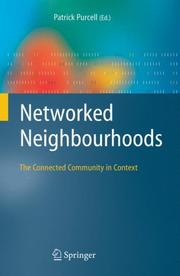
The Connected Lives project operationalizes "networked individualism" as a researchable paradigm, showing that community is better understood through individual network structures than through geographic or group-based categories. What counts as "community" depends on the unit of analysis, and the network lens reveals patterns that group-based and place-based approaches cannot capture.
Also in: methods and tools
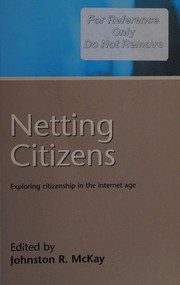
Argues that the internet has become "immanent," woven into everyday life rather than constituting a separate sphere, and that this fundamentally changes the nature of citizenship and social participation. The concept of immanence reframes how we study the internet: not as a technology with effects, but as an infrastructure through which social life is increasingly constituted.

Provides an early conceptual framework for understanding how the internet integrates into daily routines, arguing against the "cyberspace vs. real life" dichotomy that dominated early internet studies. This framing shift, from the internet as a separate domain to the internet as embedded infrastructure, has epistemological consequences for how we study and understand digital social life.
Also in: teaching and translation